Through the Years: African-American History in Champaign
County
Spring/Summer 2000
“The Shelton Laundry: 1934-1986”
by Doris Hoskins as told by Frances Shelton Moreland
To download this lesson in PDF format, click here.
Vocabulary list
-
subsidy/subsidies
dispute
negotiate
frugal
integrity
legacy
Ties to
National History -
Depression
Era
http://www.michigan.gov/hal/0,1607,7-160-17451_18670_18793-53467--,00.html
Lesson plan on
teaching the Depression using oral histories.
Set of links
for studying the Depression and the New Deal. Many lesson plans, projects, pictures, etc.
http://www.eyewitnesstohistory.com/snprelief.htm
Great link for
studying the Depression - pictures that you can click on for more
information. Good info about the
different role of the family, women, etc.
http://www.americaslibrary.gov/cgi-bin/page.cgi
Library of
Congress “America’s Library” - great site where you can “jump back in time” and
read lots of information about different periods in American History
http://www.pbs.org/wgbh/amex/rails/tguide/index.html
This site has a
teacher’s guide for a PBS movie that showed called “Riding the Rails” about
teenagers that were homeless during the Depression. You can order
the film online and get a Depression Era timeline from this site as well.
“Horatio
Alger” Story
http://www.historychannel.com/thcsearch/thc_resourcedetail.do?encyc_id=200683
Short biography
of Horatio Alger
Illinois
Learning Standards -
15.A.3d Describe the causes of unemployment.
15.B.2c Explain that when a choice is made,
something else is given up.
15.C.2b Identify and explain examples of
competition in the economy.
15.C.2c Describe how entrepreneurs take risks
in order to produce goods or services.
16.A.2c Ask questions and seek answers by
collecting and analyzing data from historic documents, images and other
literary and non-literary sources.
16.C.2c Describe significant economic events
including industrialization, immigration, the Great Depression, the shift to a
service economy and the rise of technology that influenced history from the
industrial development era to the present.
Materials -
Issues of the Spring/Summer 2000 Newsletter
Double-Entry Reflective Journal
Fortunately
by Remy Charlip
white paper
Objectives -
1. Develop vocabulary
2. Demonstrate comprehension of nonfiction
text
3. Describe what people do in times of
trouble to overcome obstacles
4. Analyze primary sources - artifacts
Before Reading
-
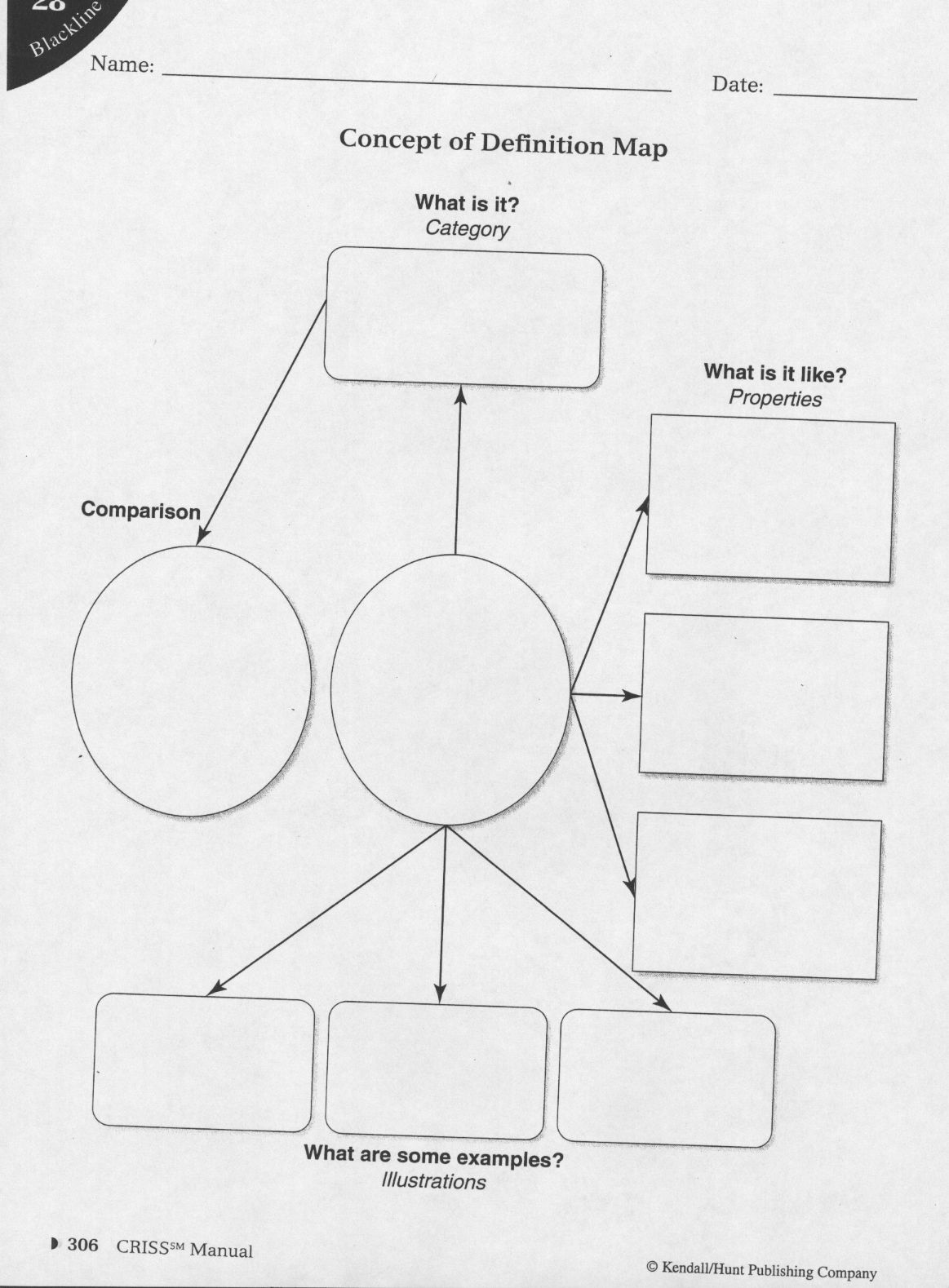
Concept of
Definition Map with vocabulary words
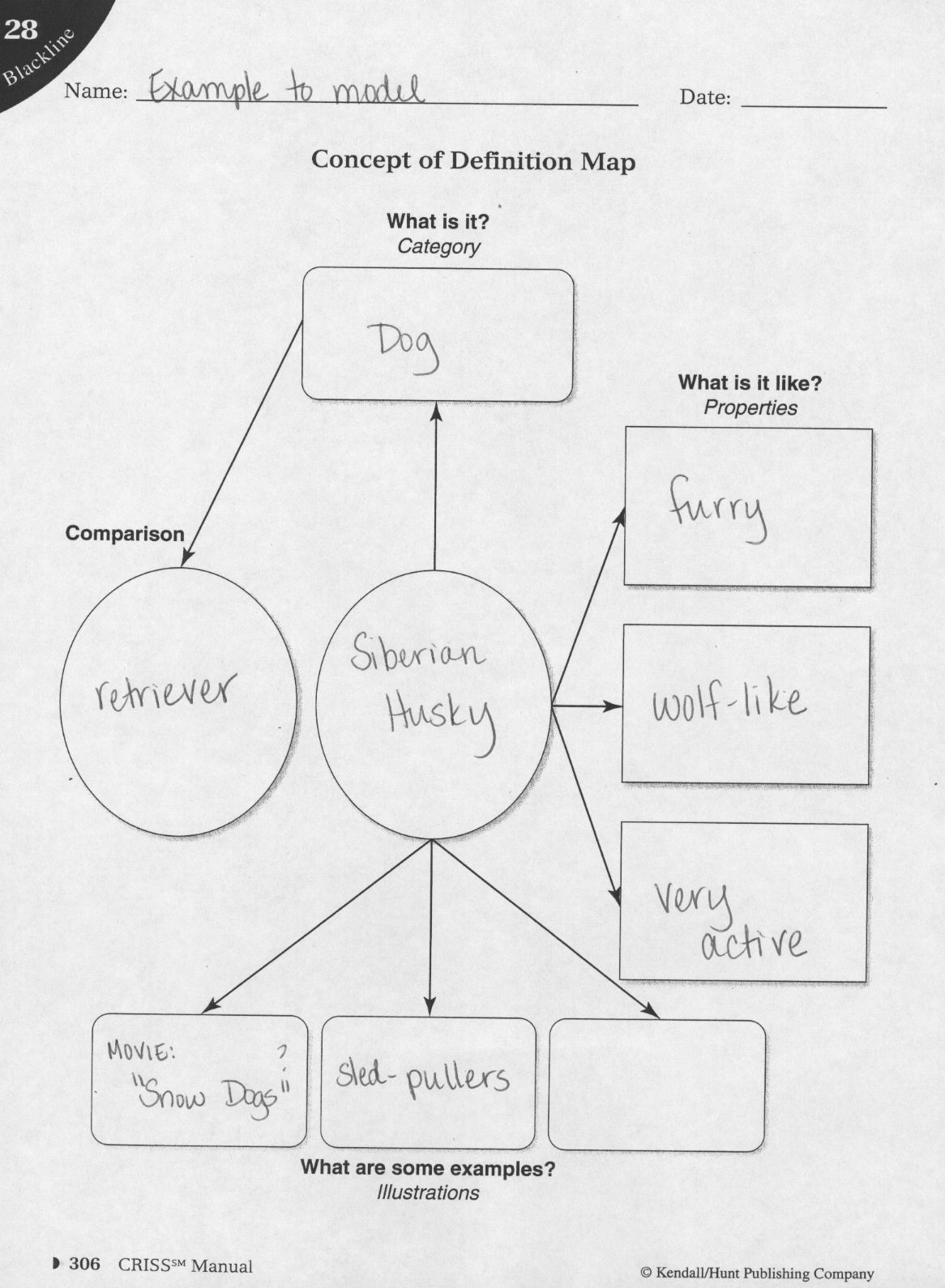
Model the
definition map using something relatively simple - the included example is “Siberian Husky,” but there are many other
possibilities! Students should
come up with the category
(what the term is), a comparison,
properties
(what it is like), and examples. Students may need a few examples
modeled before you have them work on their own.
Assign one word
each to groups of 4 students.
Using the text (they haven’t read yet, but they can find the vocabulary
and use it to help them understand a word), a dictionary, and/or each other,
they should construct one concept of definition map. When they finish, have them present their maps to the class
so that everyone is exposed to the vocabulary.
During Reading
-
Double entry reflective journal
(Ideally, the
students would be lifting the quotes or summary statements from the text
themselves. If they have never
done double entry journals before, however, this would be a good place to
start.)
To model, read
aloud a short nonfiction text. As
you read, write a meaningful quote from the text or a short summary statement
on the left side of the blackboard.
On the right side, write “This reminds me of....” and complete it, or “I
am confused because....”, “I wonder....”, or “I predict.....”
Pass out the
reflective journal pages to the students.
Briefly discuss what they think of the two quotes they see listed on the
left side of their journal.
Instruct them to read to find out not only what these quotes mean, but
what the Shelton family did during these years to help themselves succeed. Students should write their reflections
as well as the factual information from the text about the Sheltons.
After Reading -
1.
Fortunately & Unfortunately
Discuss
students’ reflections in class as well as what the Sheltons did to overcome
obstacles.
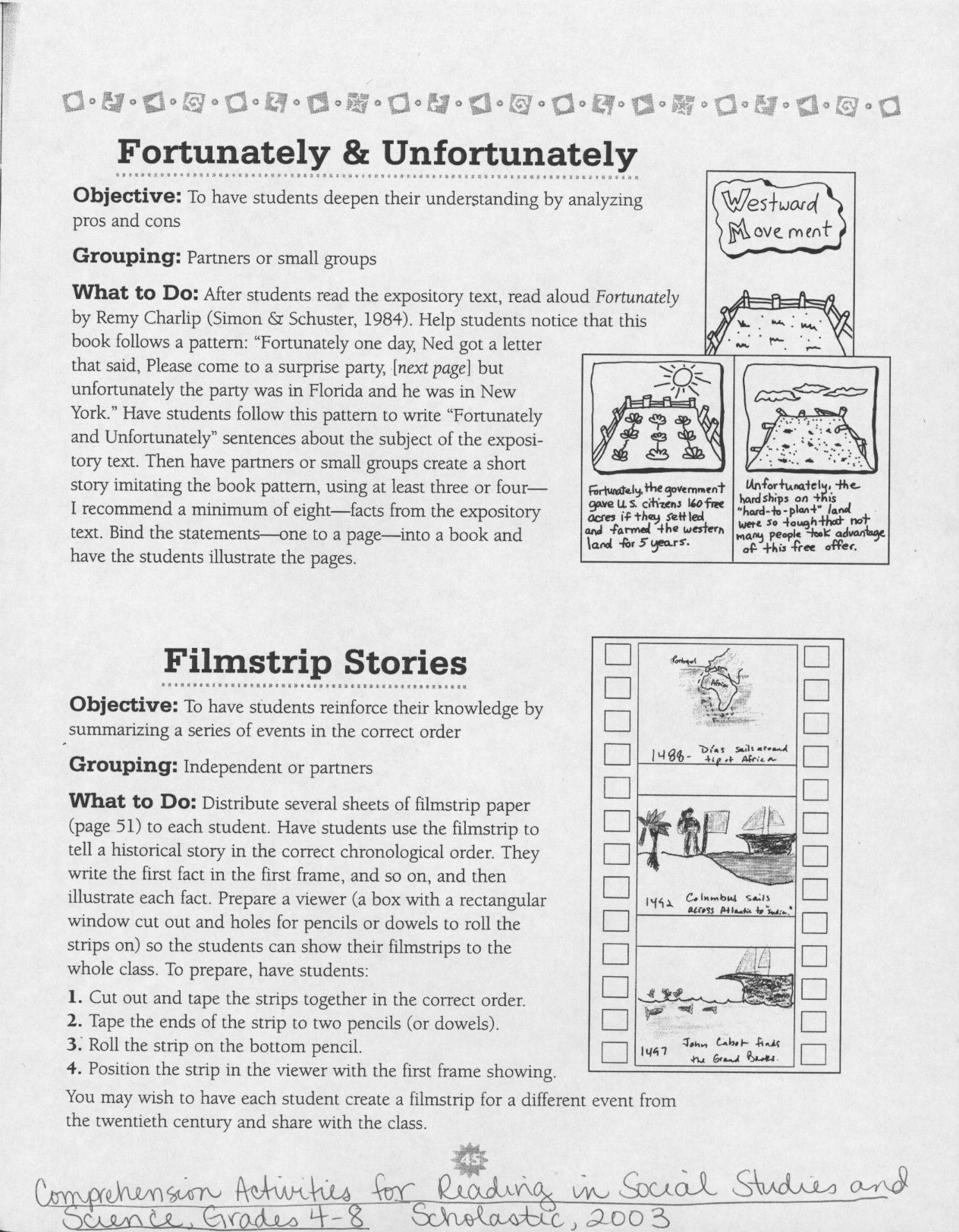
Give students a
piece of blank white paper; have them fold in half. If available, read aloud Fortunately by Remy
Charlip. This book follows a
pattern: “Fortunately one day, Ned
got a letter that said, Please come to a surprise party, but unfortunately the
party was in Florida and he was in New York.” Have students follow this pattern to write “Fortunately and
Unfortunately” sentences about the Shelton Laundry text. (For example, “Fortunately, the Shelton
Laundry was able to purchase machinery that was motor driven and they could
take on more work for the University of Illinois. Unfortunately, they had a terrible fire in 1950 that
destroyed their garage,” or
“Unfortunately, the stock market crash left people in terrible financial
crises. Fortunately, Arah Mae
Shelton decided to help her family by taking in washings to make more money.”) When the class finishes their pages,
bind them in a book and illustrate if time allows.
2. Primary Source Analysis - Analyze
artifacts
What is an
artifact?
In a computer
lab, have students sign on to http://www.history.org/history/argy/argykids.cfm
This is a
Colonial Williamsburg site with lots of games for kids to play related to
artifacts. Have them select
“Artifact Challenge” and play.
Go on to
“Artifact Match.”
Go on to “Find
Artifacts in your Room.”
When students
are done with these games, ask them, “What is an artifact?” They should by now have the idea that
artifacts can be old, but they don’t have to be! They can be anything that represents history - a diary, a
spoon, a Bible, a book, etc. The
objects in their house right now are artifacts.
At this time,
show them the pictures of artifacts from the Shelton laundry at the EAM. Have them complete the artifact
analysis sheet below and discuss when all students are complete.
Assessment -
Use the group
vocabulary map, the reflective journals, and the “Fortunately/Unfortunately”
assignment to assess student comprehension of the vocabulary and the content of
the text. Use the classroom
discussion to assess students’ knowledge about what artifacts and primary
sources are.
Artifact Analysis
(Adapted from Artifact Analysis
Worksheet,
U.S. National Archives & Records Administration)
1. Describe the material from which this
artifact was made: bone, pottery,
metal, wood, stone, leather, glass, paper, cardboard, cotton, wood, plastic,
other materials.
_____________________________________________________________________________
2. Describe how it looks, and if you are
allowed to touch it, describe how it feels: shape, color, texture, size, weight, movable parts, anything
printed, stamped, or written on it.
______________________________________________________________________________
3. Describe the uses of the artifact:
What would it
be for? Who
might it be for?
__________________________________ _____________________________________
__________________________________ _____________________________________
Where might it
have been used? When
might it have been used?
__________________________________ _____________________________________
__________________________________ _____________________________________
4. What does this artifact tell us about the
life and times of the people who made it and used it?
______________________________________________________________________________
______________________________________________________________________________
5. Can you name a similar item today?
______________________________________________________________________________
______________________________________________________________________________
***6. Draw a sketch, or bring in a photograph or the
artifact you described in #5!